What Is AEO (Answer Engine Optimization) and Why It's Replacing SEO
Jun 30, 2026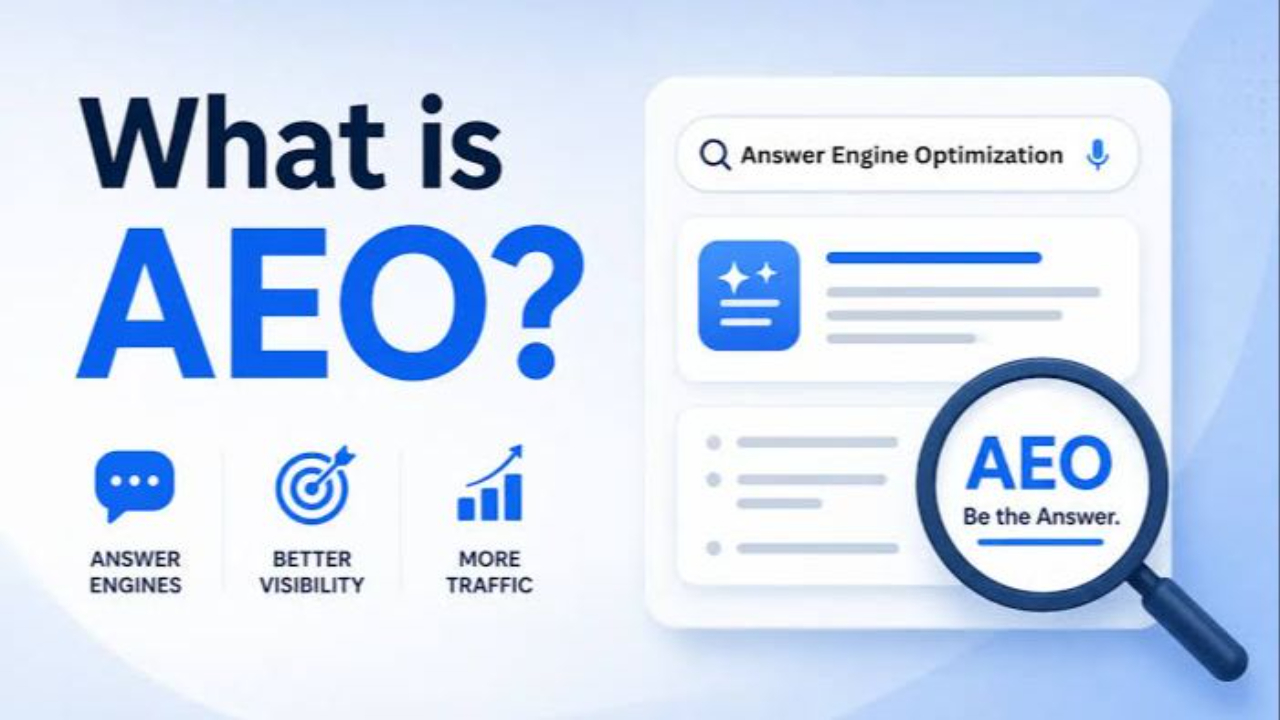
What Is AEO (Answer Engine Optimization) and Why It's Replacing SEO
Answer Engine Optimization (AEO), also called generative engine optimization or GEO, is the practice of structuring your content so AI answer engines such as ChatGPT, Perplexity, and Google's AI Overviews cite it when they generate an answer. Where SEO aims to rank a page in a list of links, AEO aims to make your page the source the AI quotes directly. It rewards clear, self-contained answers placed near the top of the page, structured data such as FAQPage and LocalBusiness schema, citations to authoritative sources, original first-hand data, and mentions of your business across trusted third-party sites. AEO does not replace SEO, because traditional search still drives substantial traffic and the two overlap heavily. The practical approach is to keep doing SEO and add one question to every page: would an AI quote this as the answer?
More and more people are getting answers straight from AI, ChatGPT, Perplexity, Google's AI Overviews, without ever clicking a website. That changes the game for getting found. The new skill is making sure the AI cites your business when it answers. That skill is called AEO.
AEO vs SEO in plain English
SEO is about ranking your page in a list of blue links. AEO is about being the source an AI quotes when it writes the answer directly. They overlap, but the emphasis differs. SEO rewards keywords and links; AEO rewards clear answers, trustworthy sourcing, and content an AI can lift cleanly.
| SEO | AEO | |
|---|---|---|
| Goal | Rank in the list of links | Be cited in the AI's answer |
| Rewards | Keywords, backlinks | Clear answers, trusted sources |
| Winning format | Comprehensive pages | Direct answers, structured data |
| Where it shows | Google results | ChatGPT, Perplexity, AI Overviews |
How to optimize for AI answers
- Answer the question directly, near the top. A clear two-to-three sentence answer that an AI can lift whole. Do not bury it under 500 words of preamble.
- Add structured data. Schema markup and FAQ markup help AI understand what your content means and makes it easier to cite.
- Cite authoritative sources yourself. AI engines favor pages that reference credible sources. Linking to official, trusted sites is a trust signal.
- Include original data. Your own numbers, results, and first-hand data are the thing AI cites most, because no other page has them.
- Build mentions across trusted sites. The more credible places reference your business, the more likely AI is to trust and cite you.
To see which schema a page already carries, open it with our free Chrome extension before you add anything new.
Write the answer so it survives being lifted
This is the technique that separates pages AI actually quotes from pages it skims past, and almost nobody does it deliberately.
When an AI pulls a passage from your page, it strips away everything around it: your headline, the paragraph before, the image, the context. If your answer only makes sense in place, it is useless once lifted. Compare these two openings to the same question:
- Hard to cite: "It depends on a few things, but generally you should expect it to take a while before you see results."
- Easy to cite: "Local SEO typically takes three to six months to produce meaningful ranking changes for a small business, because Google needs time to crawl your updates and assess consistency across your listings."
The second one names the subject, gives a specific answer, and explains why, all without depending on a single word of surrounding context. Write every key answer on your site that way and you have done most of AEO already.
Does AEO replace SEO?
Not yet, and not entirely. Traditional search still drives huge traffic, and good SEO and good AEO overlap heavily, both reward clear, helpful, trustworthy content. The smart move is not to drop SEO but to add AEO thinking on top: for every page, ask "would an AI quote this as the answer?" If yes, you are ahead of most of your competitors, who are still only thinking about blue links.
The catch nobody mentions
Being cited by an AI is not the same as getting a visitor. If ChatGPT answers the question using your content, the person may never click through to your site, so your traffic numbers will not reward you the way a first-page Google ranking would. That is a real trade-off and it is worth naming honestly.
It still matters, for two reasons. First, being named as the source is brand exposure to someone actively researching a purchase, which is the same value a billboard never has. Second, the questions where AI citations convert are the ones where people cannot self-serve the answer: they can learn from your content that a job takes three to six months, but they still have to hire someone to do it. Focus your AEO effort on questions that end with the reader needing you, not on questions the AI can fully resolve on their behalf.
Frequently asked questions
What is AEO (Answer Engine Optimization)?
AEO is optimizing your content so AI answer engines like ChatGPT, Perplexity, and Google's AI Overviews cite it when they answer questions. It prioritizes clear direct answers, structured data, and authoritative sourcing over keyword density.
Is AEO replacing SEO?
Not entirely, and not yet. Traditional search still drives major traffic, and good SEO and AEO overlap heavily. The best approach is to keep doing SEO and add AEO thinking on top, so your content works for both search results and AI answers.
Is AEO the same as GEO?
Effectively yes. Answer engine optimization and generative engine optimization are two names for the same practice: structuring content so AI systems can find, trust, and quote it. Different people and tools favor different labels, but the techniques are the same.
How do I get my business cited by AI?
Answer specific questions clearly near the top of the page, add structured data and FAQ markup, cite authoritative sources, and include original data only you have. Those signals make AI engines more likely to trust and quote your content.
Does being cited by AI actually bring me customers?
Sometimes, but not always as clicks. An AI may answer using your content without the reader visiting your site, so treat citations as brand exposure to someone actively researching. The citations that convert best are on questions where the reader still needs to hire someone after getting the answer.
What is the difference between SEO and AEO?
SEO aims to rank your page in the list of search links. AEO aims to make your content the source an AI quotes directly in its answer. SEO rewards keywords and backlinks; AEO rewards clear answers, trusted sourcing, and machine-readable structure.
Learn to use AI properly, in 20 minutes
Our AI Marketing short course shows you how to put these tools to work for your business - no jargon, no all-day webinars.
Browse the coursesLearn digital marketing in 20 minutes a day
Self-paced courses from someone who runs digital for two national brands. Build skills you can show an employer or a client.